Home | Overview | Phase I | Phase II
|
Ernest Jones[Full Interview] [Topic Top] The assessment that I did took place over probably 5 or 6 months. We made sure that we had all the points of contact that were necessary. What separates this from a regular case is that instead of going into Birmingham, AL and dealing with the mayor of Birmingham or the police in Birmingham, here you've got the Olympics coming to the city of Atlanta and you've got literally every level of law enforcement involved, every level of governmental entity. So there was a massive group of people we needed to touch base with to be able to move around to be able to get things done. Part of the assessment required an extensive amount of identifying who the key leaders were in different areas and then making contact with them. That way they would know who I was and vice versa. In the Olympics you've got all these people coming from all over the world. You've got an extremely diverse cultural atmosphere and because of that you've got the potential for all kinds of conflict particularly between law enforcement and people. The police aren't running the show, but they are making sure that it flowed smoothly. The tension for conflict between police, the majority of who would be white, and people from all kinds of parts of the world was exceptionally high and so we were trying to identify how that would work and where we would plug into this. The assessment and that leads me up to, the key factor in the assessment process was to make sure that we knew where we fit and where we could best provide the kind of service that we were supposed to. Question: Answer: Efrain Martinez[Full Interview] [Topic Top] How do we know who to talk to? We have an idea since every town has a mayor. We don't know any names, so we just call the operator and say, "Hey, give me City Hall and the chief of police." Hispanic minorities in Texas are associated mostly with the Catholic church. But you cannot ask the operator to give you the number for the Catholic church. You have to ask for a specific name. But there's always a First Baptist Church. You can call that preacher and ask him for the name of the Catholic church in that town and where the minorities go to church? I would also ask about African American churches and their pastors, and how I could reach them. Before we show up, we know a lot about the town because the people tell us. Once I arrive, I look around to see who's got the biggest business, who's got the biggest house, are they racially mixed. Usually, I ask for the top three business people and I ask those people who the top politician is. I also ask the mayor who are the top business people, the top educators, the top community organizations, the top law enforcement. Question: Answer: Efrain Martinez[Full Interview] [Topic Top] What I'm looking for is consistent names. If four of these people tell me I ought to talk to John Doe, I'll make sure I talk to John Doe. Now once I get to see them, what do I see them for? Essentially, I want to know what they know about the situation. Efrain Martinez[Full Interview] [Topic Top] Do you usually go to the city or county or whatever official first, like the mayor? Answer: Manuel Salinas[Full Interview] [Topic Top] Question: Answer: Question: Answer: Nancy Ferrell[Full Interview] [Topic Top] Question: Answer: Renaldo Rivera[Full Interview] [Topic Top] Question: Answer: Question: Answer: Martin Walsh[Full Interview] [Topic Top] Did the African-American students have an organization? Answer: Martin Walsh[Full Interview] [Topic Top] The first thing in meeting with the community was to assure myself that they were the leaders dealing with the shooting issue. After checking out the matter in a few phone calls, those identified in the media agreed to bring several of the leaders together who were meeting about this issue. It seemed that they were some of the people who were moving this matter. Stephen Thom[Full Interview] [Topic Top] Through a list of people that Larry had provided we went down that list and worked with those families who likely had relationships to the remains. Later, we met with leaders of those families, and eventually brought the leaders of those families to one large gathering of the tribe. Question: Answer: |
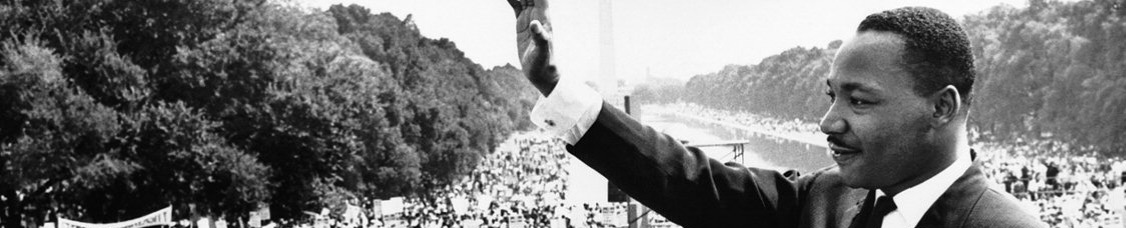
Silke Hansen[Full Interview] [Topic Top] One of my favorite people on that council was a guy named Jim. Again, he wasn't really an activist, but he wasn't shy either. He had some involvement in his local church and he became one of the key leaders of that council. When Vice President Rockefeller sent somebody to Boston to get a feel for what was happening in the community, we wanted to make sure that he got some feedback from the white community that was trying to comply with the court order, not just from the "Louise Hicks" [uncooperative] types. So Jim invited them over to his house, and had a number of his white friends including all of those who were on the biracial parent council and he started to talk to them. The council had been in effect for a while now, and he explained that some of his newest, but best friends couldn't be there, because, he couldn't assure their safety if they came to his house. He explained that there were black parents who were serving on the council, but if they walked down the street they probably would get killed. He said, "You know, I've heard so much about violent blacks and rioting blacks, and how destructive they are, and how you can't trust them. Well, I'm going to tell you something," he said, "I remember watching the march in Washington and thousands of people standing in the rain quietly praying. If those had been a bunch of Irishmen who had been treated the way black people have been treated in this country," he said, "they would've taken that damn Washington Monument and wrapped it around the Capitol! So don't ever, ever come to me talking about violent blacks, because that's a mistaken notion and I'm not going put up with it!" I was really impressed. This was not the speech that Rockefeller's envoy had expected to hear in South Boston. But people like that are the ones who sort of make this job worth it. He became a real leader in that community. |
Angel Alderete[Full Interview] [Topic Top] No, we had them select their spokespeople. It's a mistake to assume that the guy you're talking to is the leader. So we said, "Hey, go out there and choose someone yourself." Had we chosen the spokespeople, the inmates would have just laughed at us. So they brought in some people that they chose. You know, in an institution, you can know who the top leaders are, but it's a lot harder to know who the lieutenants are. Angel Alderete[Full Interview] [Topic Top] So, the people that I contacted were the agencies that serviced that area, which were very few, but they were Native American and African American. Latinos didn't have any group that they could call upon to serve them, and the Asian community had a religious group that served them, but they didn't get the sort of help from that group that the African Americans and the Native Americans got from their groups. It was mostly internal, and they usually took care of problems that arose within that Asian community and in effect, they took care of themselves. Bob Ensley[Full Interview] [Topic Top] But you just can't go in and assume that a given person is the leader. You have to find out who the real leader is. It may not be the one up there talking, the one who has the microphone. Sometimes it's the person standing there with a pair of coveralls on and his hands up into the bib area. So you have to do an accurate assessment to find out who the leader is. Then you begin to talk with those persons. And then the most important thing is, don't you try to take credit. When I did this, you always say, "Well, thank you." You give them the credit for what they're doing, and you will find out that the result is very rewarding and productive. Efrain Martinez[Full Interview] [Topic Top] I asked the mayor five or six times throughout the weeks and he just wouldn't do it, finally he says, "Let's do it." We went to his house and he called all these people and I said, "Give me the fifteen people that run this town." So he had fifteen or twenty people and we discussed what they thought of this. Efrain Martinez[Full Interview] [Topic Top] Okay. Once you do the assessment then you decide who gets to be the representatives? Answer: Question: Answer: Efrain Martinez[Full Interview] [Topic Top] Yes, I called him. Let's say in that situation, since there was a black victim involved, I wanted to see the concerns of the black community so besides calling the mayor I tried to reach the NAACP, and the ministers. I tried to reach the First Baptist church, also. As I left town I called the F.B.I. to see what had been happening. The F.B.I. district director special agent in charge talked to me and said they held a press conference at noon, and he was on his way back to Houston. He just filled me in a little bit on what happened. I had also tried to reach the mayor and the mayor finally called me back and arranged to meet with him. We arranged to meet about 7:00 or 8:00 that evening, so on the way up there about thirty minutes from Jasper, I called the mayor because I thought maybe I should meet with other people and he could notify them. He said sure, come on over we'll talk about that. He was going to see what he could do. Later I was up at his house and he had a whole lot of black men there all dressed up in suits and all that. I thought it was a monthly meeting of some group. I realized after a while that he had called them to meet with me. There must have been about fifteen, or twenty people, maybe more. They told me about what they felt about the current situation, what they had been doing already, and some historical issues involving race in the community. We agreed I would help them, and we'd look into the historical issues at a later date, but right now we would look at what's happening currently, what was expected, and who was doing what already. I found they had begun working very closely with the white ministers. Ozell Sutton[Full Interview] [Topic Top] Question: Answer: Question: Answer: Ozell Sutton[Full Interview] [Topic Top] Answer: Question: Answer: Question: Answer: Question: Answer: Will Reed[Full Interview] [Topic Top] You get to meet all these people. What's also key in a case like this, in a situation like this, is that you must not only identify administration leadership or white leadership, but you must also identify Indian leadership, and that's very hard. You go into the Indian community and you might hear a lot of talk that so-and-so is the leader or the boss. You hear all of this stuff, you write that name down, you call, you get him or her lined up, and then you learn that this person isn't the leader after all. In some communities, you won't know who the leader may be, especially in minority communities. It's a culture thing; you have to learn something about the culture. You don't barge in there, not having taken those things into consideration. Will Reed[Full Interview] [Topic Top] I started working between the President's office, the black student's association, the athletes, the football players, basketball players and what have you. All these entities were there, plus the police chief, police department on-campus, police department off-campus, because they all had a hand in this problem. I began to shift back and forth between all of the parties to get their reaction to what happened. First, I wanted to come up with just basic information about what happened. Then after that, who perceives what? Does the white students' association perceive it to be this way? Do the black athletes perceive it to be that way, and so forth. So that took a total of about eight weeks, being on and off the campus and sliding in to see the athletes, going up and consulting with the President, and listening to the white students' association. Before you can put pieces together and come to the table you sometimes have to use shuttle diplomacy. After a certain discussion with the President, I decided not to bring them together. The reason was because no matter how well it was intended ,and how good it sounded, and how much people wanted to get to the bottom of this, I also knew that certain people held grudges that would prevent it from working. You never knew who held the grudge against who. And after all the handshakes and everything else, sometimes it just wasn't good. And I knew in this situation, the poor athletes being on scholarship and everything else, weren't in the position to stand on equal ground. At least I didn't think so. So we never were going to sit down in the President's office. If there was anybody sitting down in the President's office, it was going to be me. In these types of cases I handled the conflict through on-going shuttle diplomacy. Will Reed[Full Interview] [Topic Top] So, you try to pick a way in, getting your representatives to help you along, getting allies from your side. It is important to try to figure out who the movers and the shakers are -- who's going to get things going. So you try to identify who that person may be within the establishment's office, the President's office, or within the street, or the student body office. You've got to understand, a title doesn't necessarily make a person a key spokesperson. A mouthpiece is important and the same mouthpiece is even more important when you've got those people on hand, you need to identify them. Just so happens, you're going to find the same mouthpiece in the chancellor's office, or the President's office. Who? It may be the attorney. Dick Salem[Full Interview] [Topic Top] The greatest leadership qualities came out in some of these cellblocks. Young men encouraging their fellow inmates to participate, "This is your chance to have a word, a say on how this place in run,” they implored. We found that the prison residents wanted more then anything else, to get out of the box, and this election would give them the chance to get out of their cells. Dick Salem[Full Interview] [Topic Top] Question: Answer: Dick Salem[Full Interview] [Topic Top] Typically it starts on the phone and at a certain point it continues on-site if the case warrants it. After talking to the person or people involved in the matter and making some preliminary judgements, you might give them some initial advice. I'd suggest you talk to the assistant principal and call me back. If he is unaware that this is happening in the classroom and this teacher is doing this to your child, here are some things you might do to move this forward. Here are some people locally you might call, someone we know we'd refer them to. Or depending on the state of the matter I might call the assistant principal, or the school superintendent. Very often when talking to establishment officials I would start at the top with my Justice Department credentials to get their attention and worry them a bit. They seldom want the Justice Department to come into their school, police department or community. Many people with grievances do, but no public official wants anyone from the Justice Department coming in. So we don't say this is a Community Relations Service mediator governed by a confidentially clause. We say, "this is the Justice Department.” So, we would have to be careful in determining who to call first and let them know we are coming in. We wouldn't start with the assistant principal. We might call the principal or the superintendent of schools and say we've heard there is a problem at the George Washington School, and there have been some protests, we're wondering if we can be of any help. We offer our services and ask if we can be of assistance and try to get some information. I guess everybody would approach it differently, but we try to create some rapport so this person will be willing to talk to you. You begin to build your information base, your assessment about what’s happening. Also during this time, you try to build some trust and get some indication whether they would be receptive to your coming in. Or you might just say, "we’re coming in.” You might say, "we’re coming in for this matter," or you might say, "I’m going to be in the area anyway, I’d like to drop by and chat with you about it when I’m in your city." Dick Salem[Full Interview] [Topic Top] Question: Answer: Dick Salem[Full Interview] [Topic Top] Question: Answer: |
Angel Alderete[Full Interview] [Topic Top] Question: Answer: Leo Cardenas[Full Interview] [Topic Top] First of all, by trying to bring equity to the table in terms of numbers -- numbers of the organizations. And one of the things that happened here and it happened in other cities, is bringing back to the table individuals who did not currently have a title with the organization, but had held a title before and were highly respected. We asked them to come to the table and be sort of senior, elder spokespeople and bring unity, and that worked very well. Bob Hughes[Full Interview] [Topic Top] It would've been the time prior to that first meeting when I would've pointed out to the home owners, "There needs to be some kind of entity that the tribe can deal with, who do you want to be? Can we identify you as a particular group?" As I recall, the minister was chosen. They chose their own people, although I had probably been responsible for identifying those who were interested and urging. |
|
|
|
by Conflict Management Initiatives and the Conflict Information Consortium Beyond Intractability maintains this legacy site as it was created in 2007 with only minor formatting changes made in conjunction with the posting of Phase II of the Civil RIghts Mediation project in 2025. |
|
|
|
|
|
by Conflict Management Initiatives and the Conflict Information Consortium Beyond Intractability maintains this legacy site as it was created in 2007 with only minor formatting changes made in conjunction with the posting of Phase II of the Civil RIghts Mediation project in 2025. |
|
|